Whenever I join a new CS org, its pretty easy to predict what I’m about to find.
It starts with a group of empathetic, hardworking people doing their absolute best to keep customers happy.
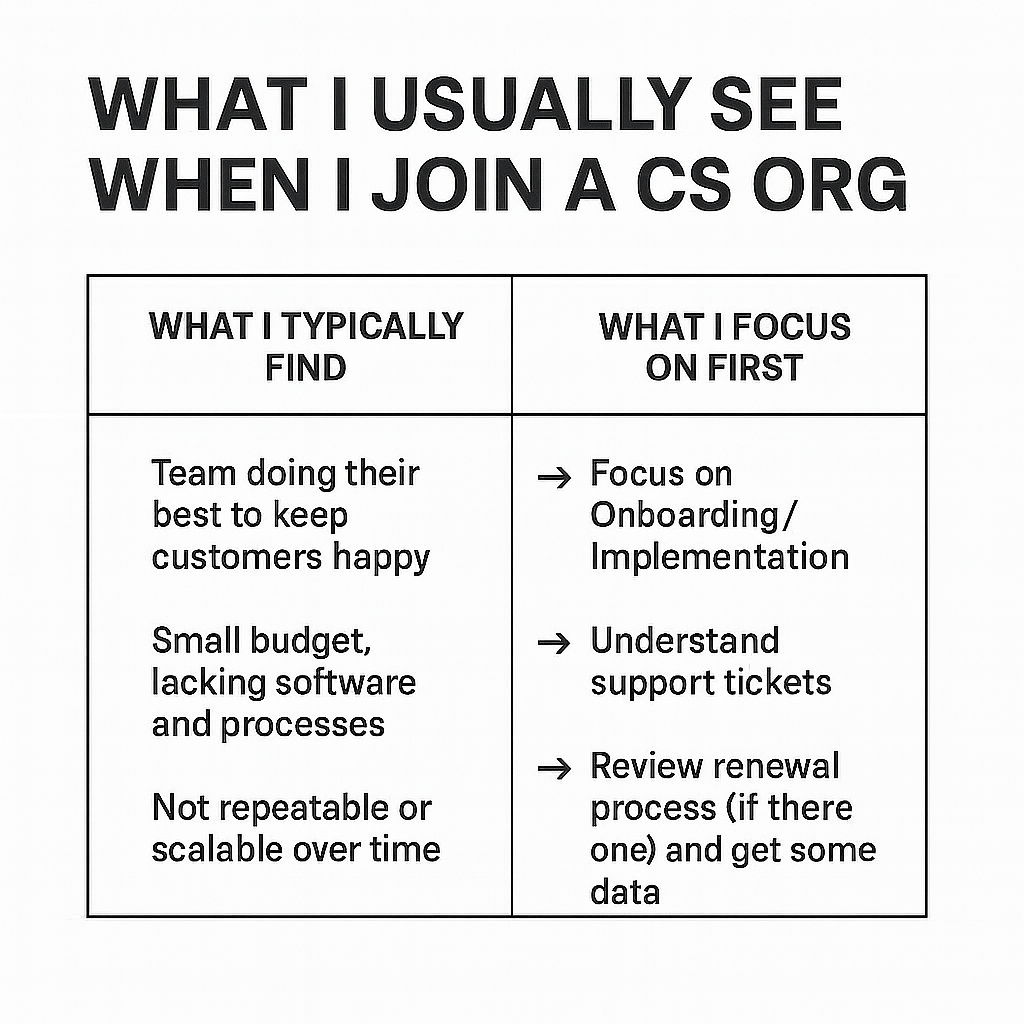
They’re running on goodwill, not process. Small budget. No real software. A few well-intentioned spreadsheets.
Everyone’s trying their hardest but nothing is scaling. There’s no cohesion cross-functionally. The group is often seen as an afterthought.
Even when leadership swears they “care deeply about customer success,” the team is usually flying blind, reacting instead of leading, and looking for someone to help them dig out of the hole they’ve been placed in.
Through no fault of their own.
Most of these teams inherited customers they never met, never discussed goals with, and were handed the mandate: “Keep them happy.”
The Short-Term Trap
On a basic level, that doesn’t sound so bad. Keeping customers happy feels like the right mission. But over time, that approach breaks down.
It’s too short-sighted. It doesn’t scale. It’s not repeatable. And eventually, no matter how kind or responsive the team is, you start losing accounts.
A mentor told me years ago:
“Heroics don’t ensure customers sign long-term contracts. Repeatable process and consistency does.”
That line stuck with me. Because in the fog of a fast-growing startup, heroics feel like progress. But they’re not. They’re a tax on the people trying to hold the system together.
The Common Pattern
When I walk into these orgs, the setup is almost always the same:
- 3–5 full-cycle CSMs each handling everything from onboarding to renewals.
- Each person gravitates toward their comfort zone: one leans into training, one handles support, one “owns renewals” (which really means sending renewal emails and hoping the customer replies or the auto-renewal goes through undisturbed).
- There’s no segmentation, no defined process, and no clarity around what “success” actually means for the customer or the company.
It’s not malicious. It’s survival. And because the team is constantly busy, (swamped) it’s easy to mistake activity for effectiveness.
What I Do First
When I enter a scenario like this, I don’t start by adding tools or headcount. I start by pausing.
I take a step back and ask:
- Why is everyone so busy?
- Where are the real bottlenecks?
- What’s driving all this motion — and is any of it repeatable?
From there, we can start designing a system that works with the team, not against them. Start with onboarding/implementation, review the support tickets, understand if there is a renewal process.
That is more than enough to get you started.
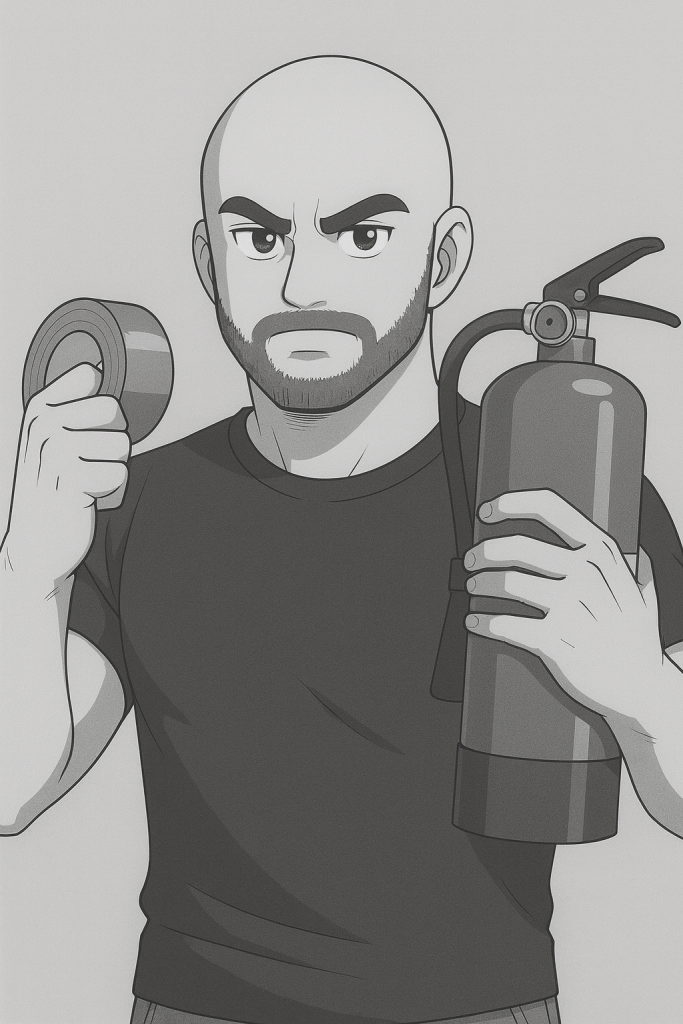
You can’t scale a CS org built on heroics and duct tape. But you can scale one built on clarity, consistency, and confidence in the customer journey.
 Robert Statsky