In Customer Success, we talk a lot about managing customers. But managing your own leadership. That’s the real test.
The Reality of Managing Up
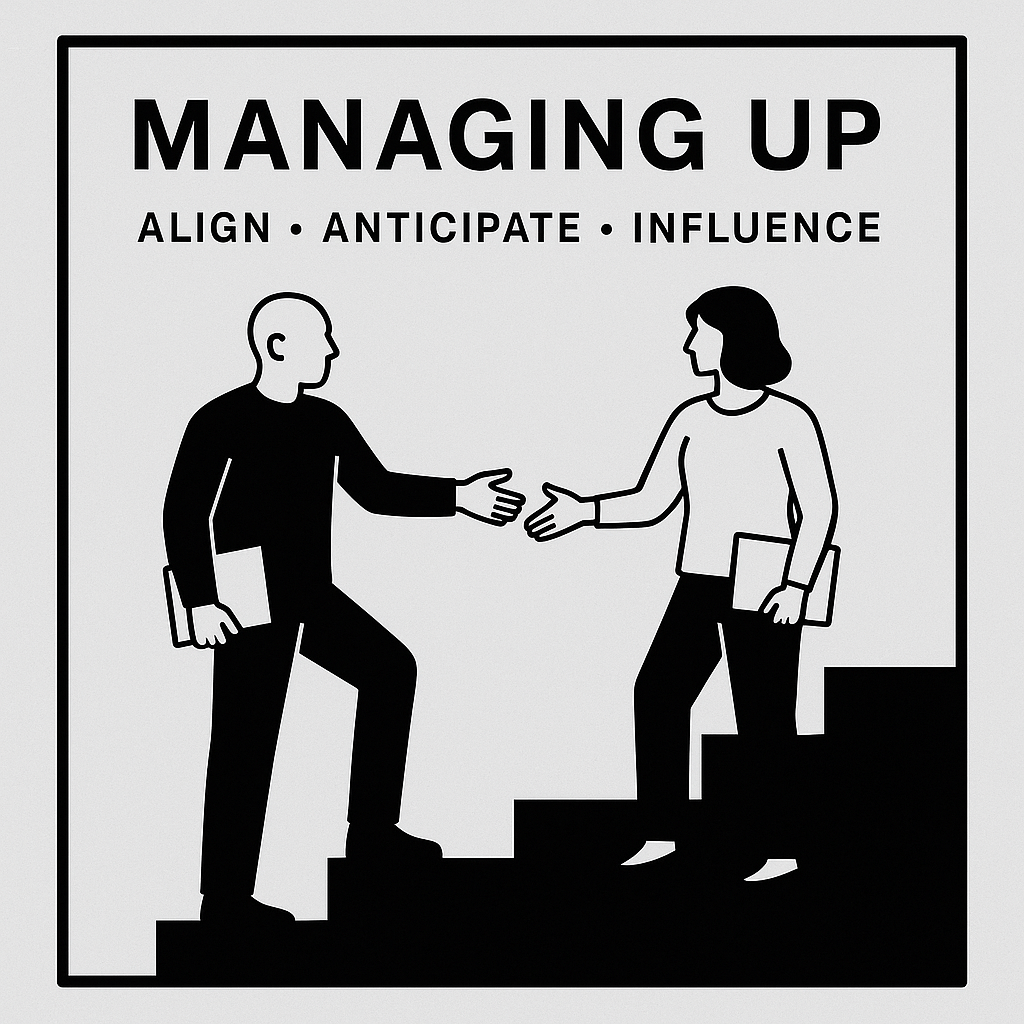
Managing up isn’t manipulation or politics. It’s the art of alignment. Ensuring your work supports the direction your leadership team is moving in, even when that direction shifts weekly.
At its core, managing up means making your boss successful.
Not by saying yes to everything, but by helping them focus, anticipate risks, and make better decisions.
Why It’s Hard: Especially in Founder-Led SaaS
Here’s the tension no one likes to admit:
Many leaders say they want feedback and to be challenged. But what they actually want is compliance wrapped in diplomacy.
I’ve seen it across startups and growth-stage companies, both in my own experience and across the experience of other colleagues and friends. The stories I hear are all the same…
Founders are emotionally tied to their product. C-suite leaders are under pressure to hit board targets. When you question an approach, it can feel personal, even when it’s not.
That’s where the skill of managing up really matters. It’s knowing when to speak, how to frame it, and how to keep trust intact.
This is especially hard for leaders in Customer Success because for the most part, you still don’t have a seat at the table, even if technically you’re at the table. You’re there because the customer is valued and it is known a leader is needed for this function.

But as I have said before many times…Customer Success is the only function in B2B SaaS where EVERYONE thinks they can do your job better than you. Where a lot people think you just need to listen to customers and be attentive and timely and all problems are solved.
Most leadership thinks it’s easy and anyone can do it. I don’t know another function that exists at these companies like this.
I don’t believe I can run a sales org, or a product org really well. I could fill a seat but that doesn’t mean I could do it well.
It’s a tricky role to be in. Especially if the founders managed the customers before you got there. The founders have deep, deep relationships with those customers because many times the customers took a chance on their product. Handing that off is not easy, and it’s hard to gain trust off someone you interviewed a few times.
How well do you know someone after 2-3 hours of interviews, maybe one meal, a coffee or drink, and their LinkedIn posts?
It’s a risk. I’ve been in this situation before, and CS wants autonomy and the founders just want to keep their customers happy. So what do you do?
How to Manage Up Well (or at least better)
1. Understand What Drives Your Boss
Is it metrics, board perception, speed, or innovation? You can’t manage up effectively until you know what their success looks like.
2. Communicate Before Being Asked
Executives hate surprises. A short, proactive update builds confidence and reduces anxiety. Slack is your friend. Send daily updates if needed. Bullets only.
3. Frame Challenges Around Shared Goals
Instead of saying “I disagree,” try “Here’s another way to reach the retention target faster.” You’re shifting the frame from confrontation to contribution.
4. Pick the Right Moment
Timing is everything. Avoid challenging big decisions in public or in the heat of stress. Find the calm moments to influence.
5. Help Them Win, Even Quietly
Your goal isn’t to prove you’re right. It’s to make the organization stronger. The best managers make their leaders look composed and capable.
Common Pitfalls
- Over-communicating: flooding your boss with noise instead of clarity. Don’t bring problems, bring solutions.
- Going around them: breaking trust by escalating sideways.
- Forgetting their pressures: assuming they have the same visibility and headspace you do.
When Managing Up Fails
Sometimes, despite your best effort, a leader simply doesn’t want to be managed. They see questions as dissent. They equate honesty with insubordination.
In those cases, your best move is to manage your own boundaries. Stay professional, limit emotional investment, and document outcomes.
You can’t always change a boss’ mindset. But you can protect your reputation and lead with integrity.
Managing up is an advanced leadership skill. It’s about empathy, timing, and influence, not compliance. Do it well, and you don’t just become easier to manage. You become the kind of leader others want to manage up to.
After 20 years I’m still figuring it out, but it’s worth thinking this through especially if you’re joining a new organization.
 Robert Statsky