I’ve been thinking a lot about incentives lately. Not in the abstract, but very practically.
How do you actually motivate Customer Success teams: CSMs, Implementation, Onboarding, Support, Solutions, in a way that drives the right behavior without turning the job into something it was never meant to be?
Money is part of the answer. But it’s not the whole answer.
If monetary upside were the primary motivator, most CS professionals would work in Sales. The ceiling is higher. The recognition is louder. The rules are simpler: close deals, make money.
Customer Success is built differently.
It requires a broader skill set:
- Relationship management
- Commercial judgment
- Technical fluency
- Change management
- Emotional intelligence
- Long-term thinking
Selling is hard. There’s no minimizing that.
It takes discipline, repetition, frameworks, resilience.
But Sales has a very clear finish line.
Customer Success doesn’t.
The goal isn’t just revenue, it’s durable revenue.
It’s renewal. Expansion. Advocacy.
It’s managing complexity over time, not winning a single moment.
Where Incentive Plans Usually Go Wrong
Early in my career, I noticed a pattern.
Sales comp plans were meticulously designed:
SKUs, accelerators, clawbacks, calculators, edge cases.
Customer Success comp plans?
Often discretionary.
Often vague.
Often treated as “nice to have.”
When incentives are discretionary, what you’re really saying is:
“We’ll pay you if things go well.”
That creates uncertainty.
It erodes trust.
And it disconnects effort from outcome.
To be fair, many early-stage companies don’t have clean enough data to tie CS outcomes directly to revenue. Data hygiene and attribution are hard.
But that doesn’t mean incentives shouldn’t exist.
It means they need to be simpler and more intentional.
What Actually Motivates CS Teams
Yes, money matters.
But CS professionals also care deeply about:
- Fairness
- Clarity
- Feeling supported
- Feeling protected
They want to feel like they’re getting what they deserve, not just financially, but operationally.
One of the biggest demotivators in CS?
Getting handed accounts they know won’t renew.
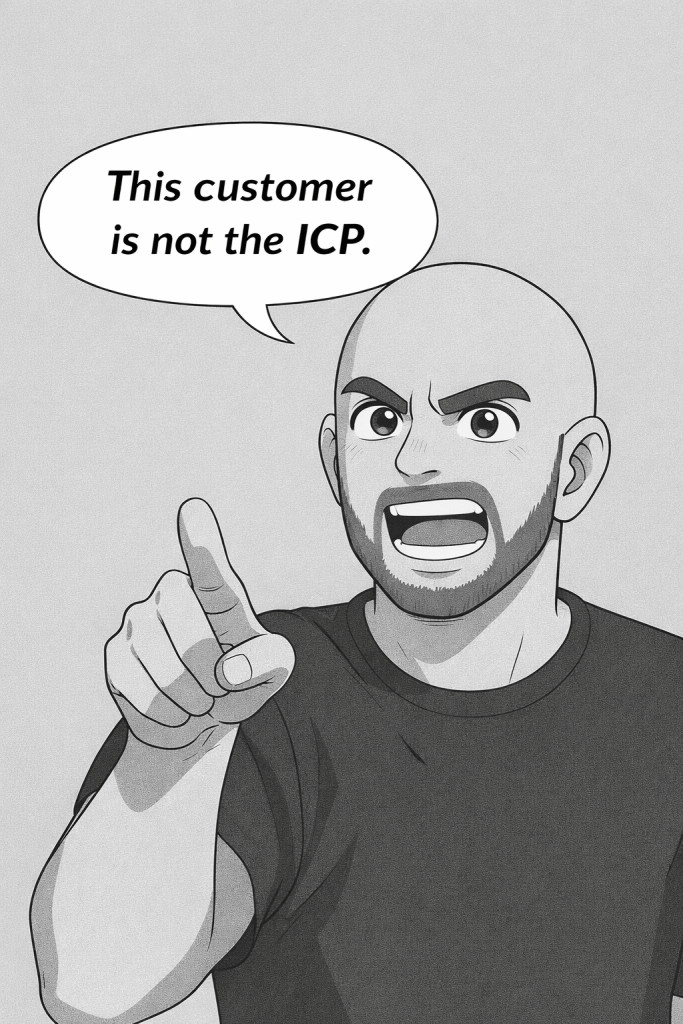
Nothing kills morale faster than being asked to “save” customers that should never have been sold in the first place.
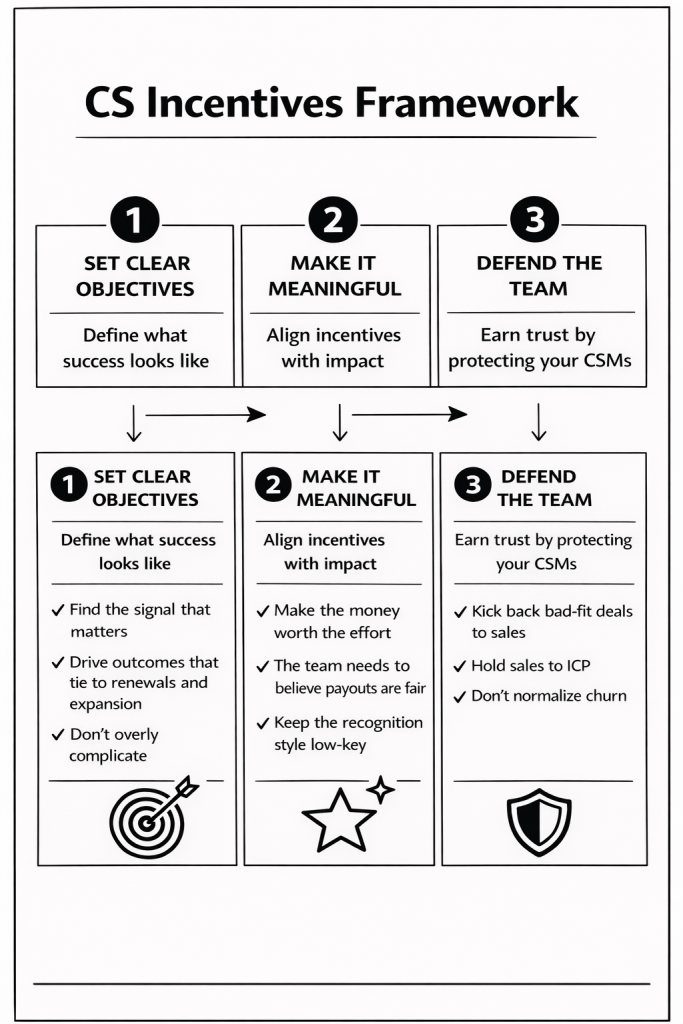
Leaders who protect their teams, who push back on poor-fit deals, hold Sales accountable to ICP, and refuse to normalize churn, earn enormous trust.
Do that, and your team will believe you understand the job.
Recognition Without Spotlight
Recognition matters, but not the way it does in Sales.
Most CSMs don’t want public spectacle.
They don’t want to ring bells.
They don’t want to be paraded.
I’ve seen incredibly strong CSMs visibly uncomfortable when forced into flashy recognition moments.
Read the room.
Recognition can be:
- Private acknowledgment
- Thoughtful notes
- Career growth
- Trust and autonomy
- Meaningful incentives without performative theater
Designing Incentives That Actually Work
Start with the goals of the organization.
Then tie incentives directly to behaviors that predict those outcomes.
Ask:
- Does account activity correlate with expansion?
- Does coverage impact renewals?
- What signals indicate long-term success?
Find your activation metric.
At Trustpilot, activation meant customers collecting reviews consistently, often automatically.
Activated customers had a 30–40% higher likelihood of renewal.
We also knew that once a customer made it past the first year, the probability of renewing in year two jumped to 75%+.
So we optimized incentives around the first-year experience.
More structure.
Clearer metrics.
Tighter feedback loops.
The goal wasn’t just revenue.
It was creating customers who stuck.
The Final Piece: Safety
Psychological safety gets talked about a lot, and rightly so.
But it goes beyond being “nice.”
Safety means:
- Defending your team when things go wrong
- Saying no to bad business
- Not sacrificing long-term health for short-term numbers
When CS teams feel safe, supported, and fairly incentivized, they perform better.
Not because they’re chasing a prize but because the system respects the work.
That’s how you get the most out of a Customer Success organization.

 Robert Statsky