I’ve been writing in a journal for almost 25 years.
Not every day. Not every month.
Some years I barely touch it. Other years I pour everything into it.
But when I look back at old entries: 10, 15, even 20 years ago, I notice the same two themes showing up over and over again:
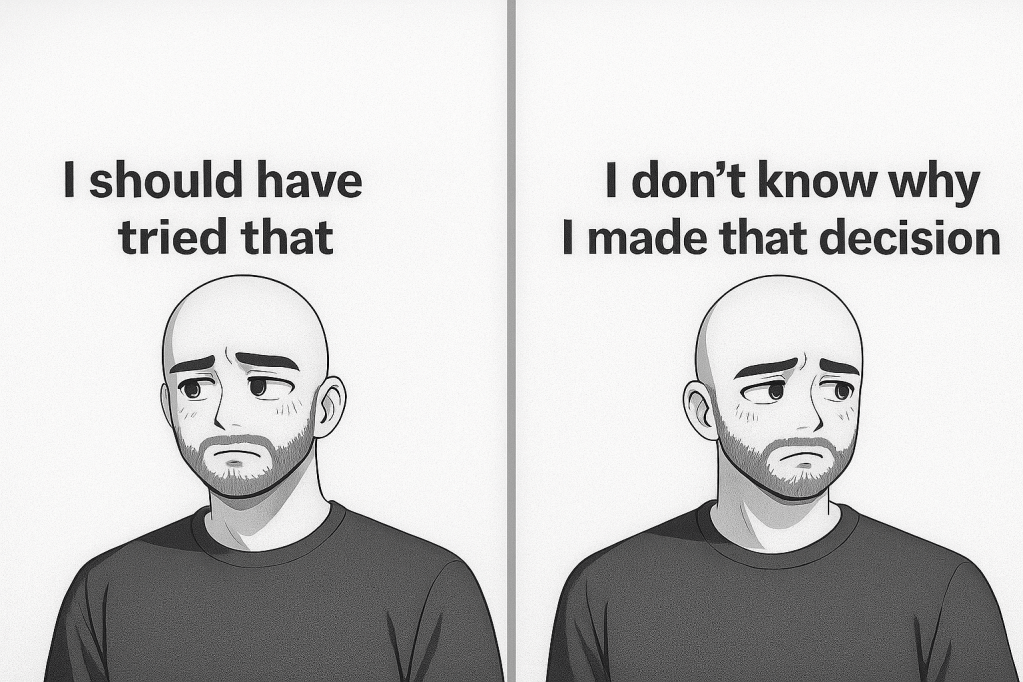
Fear & Regret
Not in dramatic ways… but in quiet, persistent ways that follow through life.
And the older I get, the more I believe this:
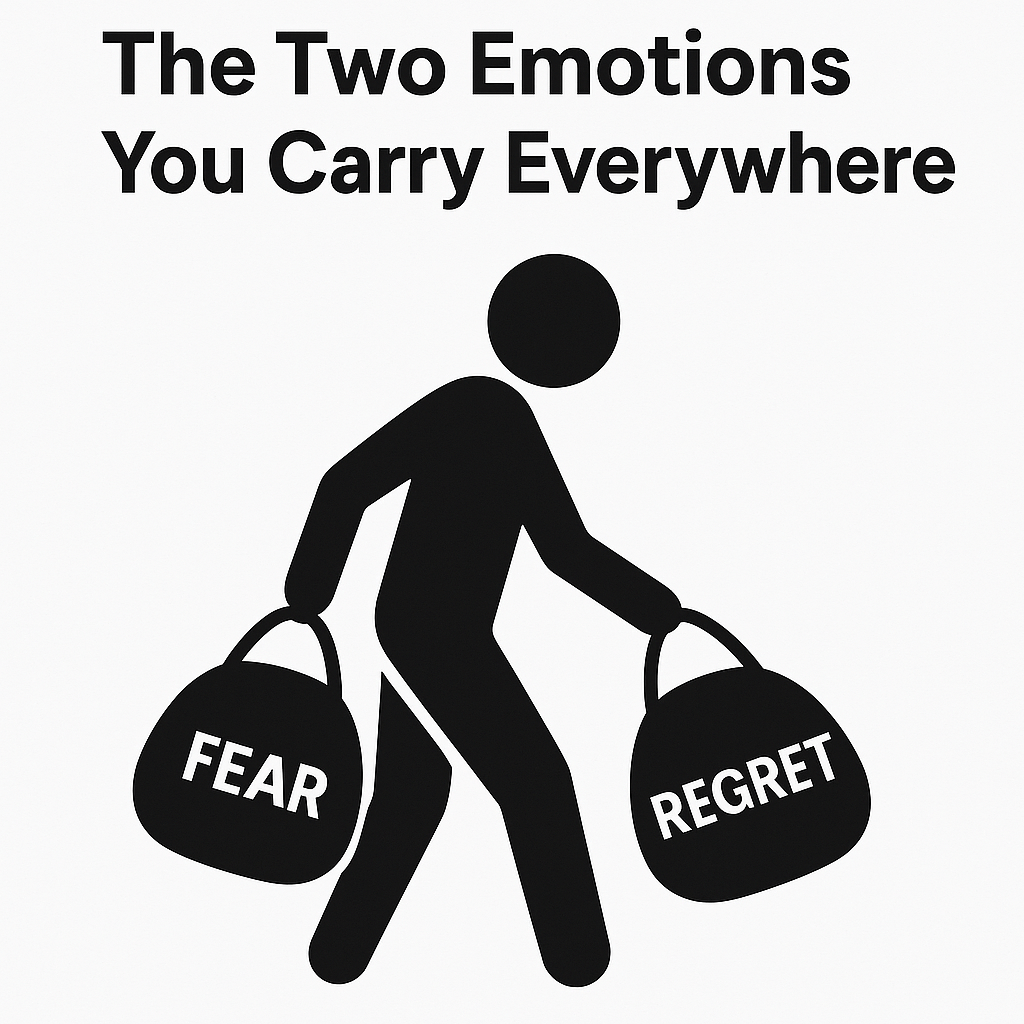
Fear and Regret are permanent traveling companions.
You don’t get rid of them when you succeed.
You don’t get rid of them when you fail.
You don’t outrun them by making more money or reaching a certain title.
You carry them both, everywhere, always.
Fear when things are going well.
Fear of losing momentum.
Fear of messing it up.
Fear of the next shift, the next reorg, the next macroeconomic curveball.
Even in good times, fear whispers:
What if this doesn’t last?
And sometimes there’s regret too:
Regret that you didn’t take a bigger swing, start the business, make the phone call, speak up sooner.
Regret when things aren’t going well.
When you’re between roles, or rebuilding, or going through a transition, regret multiplies fast.
Regret for choices you made.
Regret for the ones you didn’t make.
Regret for not seeing the signs sooner.
And fear creeps in too:
What if this doesn’t get better?
But here’s where it becomes strangely grounding:
The duality never leaves.
Whether you’re thriving or struggling, you experience both emotions.
They’re not signs you’re on the wrong path.
They’re signs you’re human.
There’s relief and perspective in that.
Especially during the months where I’ve been between jobs, redefining my next chapter, trying to see the bigger picture.
It reminds me of that line:
“Miles to go before I sleep.”
It’s all temporary, the good times, the bad times, the uncertainty, the clarity.
You never stay anywhere forever.
The Leadership Layer
This applies even more deeply to leadership, especially in Customer Success.
CS leaders carry an unusually heavy emotional load:
• Decisions that impact customers
• Decisions that impact revenue
• Decisions that impact people’s careers
• The responsibility to be both optimistic and brutally realistic
• Constant scrutiny
• The pressure to be resilient for everyone else
Every decision has a shadow.
Fear you’re choosing wrong.
Regret you didn’t act faster or move slower and more deliberately.
Fear someone will question your judgment.
Regret about conversations you should have had earlier.
And today, when being “contrarian” is fashionable, every decision feels like an invitation for someone to challenge it.
But the best leaders I’ve worked with (and the kind I try to be) aren’t the ones who make perfect decisions.
They’re the ones who:
• Make decisions despite fear
• Accept full accountability even when uncomfortable
• Don’t hide behind committees or consensus
• Don’t crumble when someone disagrees
• Keep moving forward when others freeze
• Admit when they’re wrong and course-correct fast
Real strength is continuity.
It’s the willingness to continue leading while carrying both fear and regret, without letting either one dominate you.
Why This Matters in 2026
The world is volatile.
Leadership expectations have changed.
Customer Success has changed.
The job market has changed dramatically.
You’re never going to feel 100% certain.
You’re never going to eliminate fear.
You’re never going to eliminate regret.
But what you can do is choose action over paralysis.
You can choose movement.
You can choose self-awareness.
You can choose resilience.
You can choose to keep going, no matter the chapter.
And in the end, carrying fear and regret isn’t a flaw.
It’s part of the human experience.
It’s part of leadership.
It’s part of becoming someone capable of navigating an unpredictable world.
You carry both emotions with you.
The question is: What do you do next?
Because the people who thrive aren’t fearless.
They’re simply willing to move forward with fear and regret and not let either one define them.
 Robert Statsky